*ANGLE OF APPROACH OR APPROACH ANGLE

Approach angle (α) is the maximum angle of a ramp onto which a vehicle can climb from a horizontal plane without interference. It is defined as the angle between the ground and the line drawn between the front tire and the lowest-hanging part of the vehicle at the front overhang.. Approach angle are referred to as ramp angles. Approach and departure angles are indicators of off-road ability of the vehicle: they indicate how steep obstacles, such as rocks or logs, the vehicle can negotiate according to its body shape alone .
In simpler way approach angle is defined as the maximum angle made by the lowest point of tyre and lowest point of bumper with respect to road /surface on which the vehicle is in motion
* ANGLE OF DEPARTURE OR DEPARTURE ANGLE
Departure angle (ß)is the maximum angle of a ramp onto which a vehicle can descend from a inclined plain to horizontal plain without interference. It is defined as the angle between the ground and the line drawn between the rare tire and the lowest-hanging part of the vehicle at the rare overhangits counterpart at the rear of the vehicle – the maximum ramp angle from which the car can descend without damage. In simpler way departure angle is defined as the maximum angle made by the lowest point ofrare tyre and lowest point of bumper with respect to road /surface on which the vehicle is in motion
*BREAK OVER ANGLE
β° = Breakover angle; C = Underside of chassis; W = Wheel; G = Ground; M = Midpoint of wheelbase
Breakover angle is the maximum possible supplementary angle (usually expressed in degrees) that a vehicle, with at least one forward wheel and one rear wheel, can drive over without the apex of that angle touching any point of the vehicle other than the wheels.This definition is contingent upon the wheels being in continuous contact with the supporting surface(s). Break over angle may also be referred to as “break-over angle” or “break over angle.” Break over angle is different from ground clearance in that ground clearance is the shortest distance between the ground and lowest point on the vehicle.
In simpler way break over angle is the angle made the lines which are the tangents to typre (both rare and font)and passing through centre of base of vehicle.
SLIP ANGLE
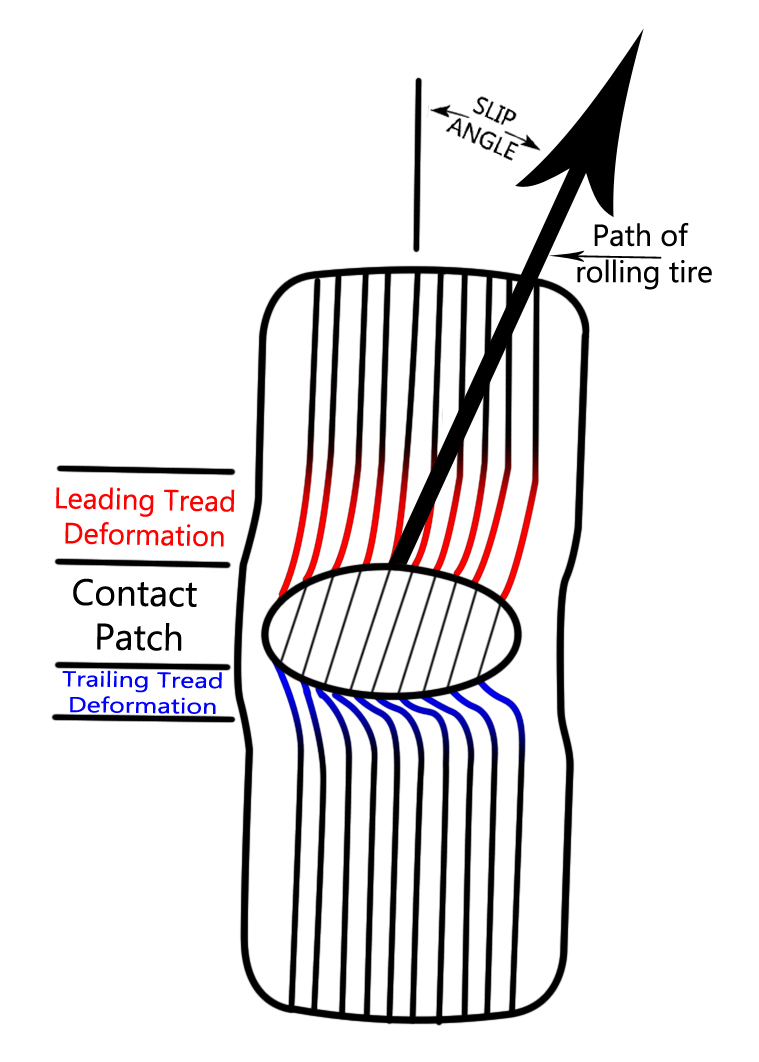
Slip Angle. The slip angle of a vehicle describes the ratio of forward and lateral velocities in the form of an angle and is normally represented by the symbol β (Beta). Slip angle is theangle between a rolling wheel’s actual direction of travel and the direction towards which it is pointing.
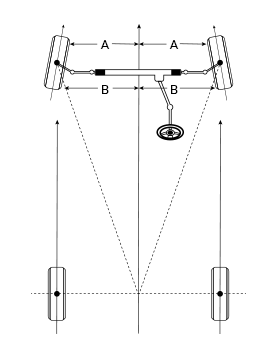
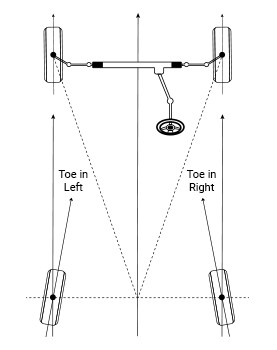
Front ToeFront toe sometimes referred to as “Tracking”, relates to the way the actual width of the track varies from the front to the rear of the front wheels. As viewed from above the front road wheels will be either pointing towards the centre line of the vehicle or away from it. If the wheels are pointing away from the centre line this is referred to as Toe Out (also called Negative Toe). If the wheels point towards the centre line it is called Toe In (also called Positive Toe).These settings are built into the steering geometry to reduce the tyre wear to a minimum and counteract the tensions built up by the geometry angles. If these angles are not set equally to the centre line this will be shown up as the steering wheel not being straight. An exception to this rule would be due to thrust angle compensation.
Rear Toe
Again the rear toe on a vehicle is set to give minimum tyre wear. It is also used to assist straight line stability. Wheels need to be set equal on both sides of the vehicle, otherwise a thrust angle is introduced. The effect of this will be uneven tyre wear and the steering wheel will not be straight.
Camber
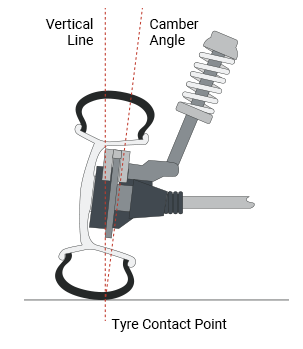
Camber is the angle of the road wheel measured from true vertical. Negative camber is when the top of the wheel is leaning into to the vehicle. Positive camber is when the top of the road wheel is leaning away from the vehicle. This angle is set to assist the vehicle when cornering as well as assisting straight line stability. The camber angles must be equal either side of the vehicle. If not the vehicle will pull of drift either left or right. If the camber is not set correctly the tyres will show wear on just one side. Too much negative camber will wear the inside edge of the tyre, too much positive camber will wear the outside edge of the tyre.
Castor
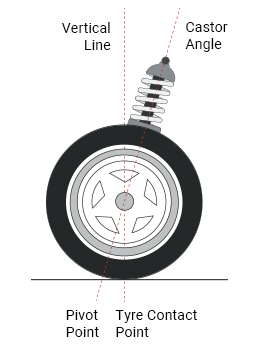
Castor angle in a car simulates the angle of the forks on a push bike. It is designed to give the vehicle straight line stability. This angle is only adjustable in a few vehicles. This angle is often over looked on a problem vehicle. The cause of castor problems is usually accident damage. Both castor angles do not need to be the same as the effects of the road. Camber can influence the vehicle drifting left or right. In the UK, cars are often set with the left castor slightly higher than the right to compensate for the road camber.